

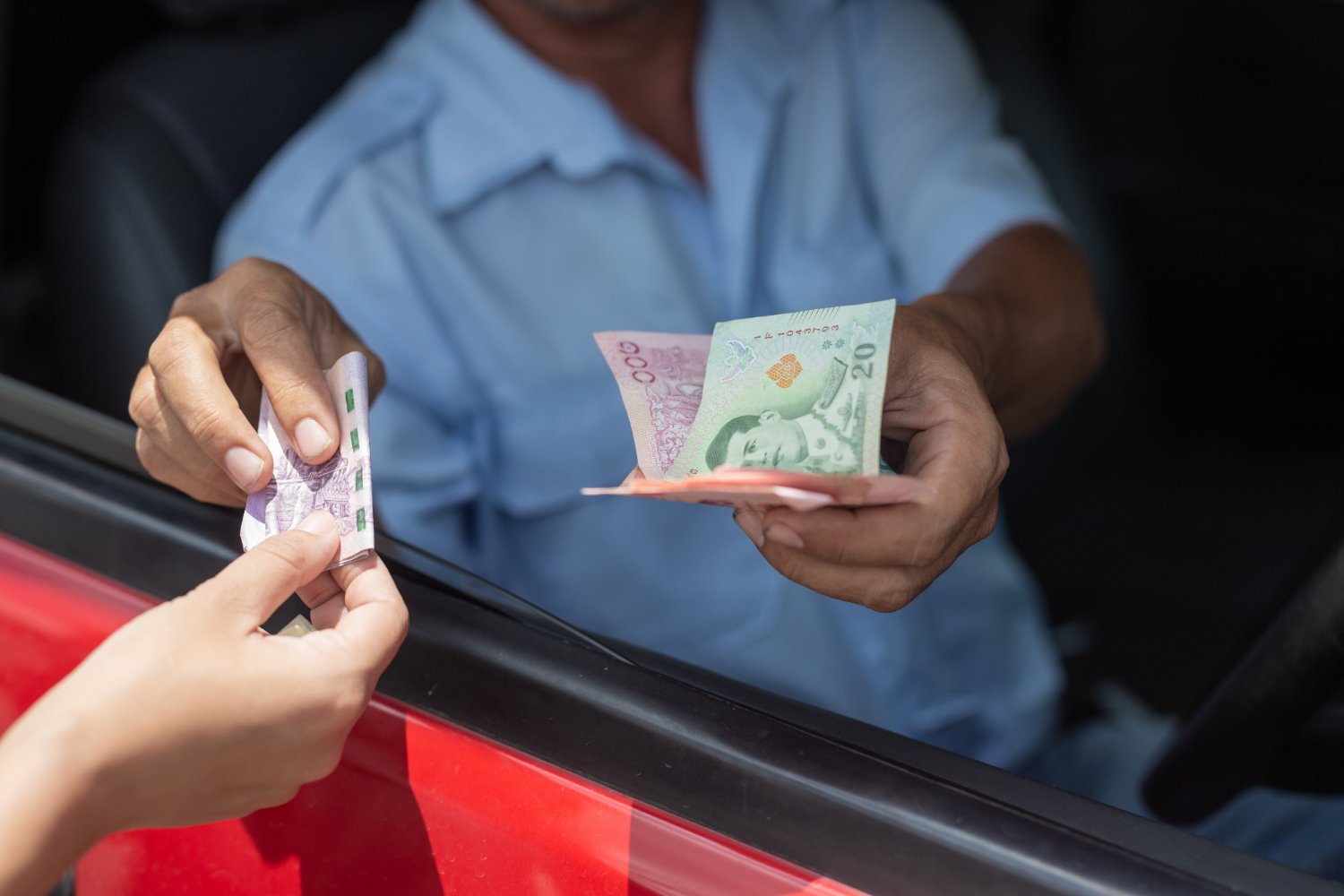
How much should you actually tip in Bali? The honest answer is that tipping in Bali is appreciated but never required, and almost every tip is paid in cash using Indonesian Rupiah rather than a card. Unlike the United States, where leaving around 20% is effectively expected, Bali has no mandatory tipping culture. A tip here is a small thank-you, not a bill.
If you are planning a trip, the practical takeaway is simple. Keep a small stack of low-denomination rupiah notes and hand them over with a smile. Most workers will be genuinely grateful, and nobody will frown at you if you skip a tip in a place that already adds a service charge.
Here is the full breakdown of who to tip in Bali, roughly how much, and why cash matters so much.
Is tipping expected in Bali?
No. Bali and the wider Indonesia do not have a mandatory tipping culture the way the United States does. Service staff are paid a base wage, and while those wages are modest by Western standards, a tip is not the main part of their income. When you tip, you are showing appreciation, not covering a wage gap.
That said, tourism has shaped habits in the busy southern areas like Kuta, Seminyak, Canggu, and Ubud. Workers who regularly serve international visitors have come to expect small tips from tourists, even if a local customer might not leave one. The result is a relaxed middle ground. Tip when the service is good, keep it modest, and do not stress about exact amounts.
A useful distinction is the service charge. Many sit-down restaurants and hotels in Bali already add a service charge to the bill, often shown on the menu with a “++” symbol. That “++” means the listed price excludes government tax of 10% and a service charge, which is commonly around 5% to 10%. If you see it on your bill, the tip is already covered and you do not need to add more.
How much to tip in Bali: a quick reference
There is no official rulebook for how much to tip in Bali, and locals will not expect you to follow precise percentages. The ranges below are honest, commonly accepted starting points. Treat them as guidance rather than a tariff.
- Driver for a full day: Rp 50,000 to Rp 100,000
- Driver for a short trip or transfer: round up to the nearest Rp 10,000 or Rp 20,000
- Restaurant with no service charge: Rp 10,000 to Rp 50,000, or roughly 5% to 10%
- Spa or massage therapist: Rp 20,000 to Rp 50,000
- Hotel porter: Rp 10,000 to Rp 20,000 per bag
- Hotel housekeeping: Rp 10,000 to Rp 20,000 per night
- Tour guide for a day: Rp 50,000 to Rp 100,000
For context, the Rp 10,000 note is worth well under one US dollar. Even the top end of these ranges, Rp 100,000, is only a few dollars. Small tips go a long way in local terms and cost you almost nothing.
Who to tip in Bali and how much
Drivers
Private drivers are the backbone of a Bali holiday, and they are the people most travelers tip. If you book a driver for a full day of sightseeing, Rp 50,000 to Rp 100,000 at the end of the day is a standard thank-you. For a short transfer, rounding the fare up to the nearest convenient note is plenty.
For Grab and Gojek, the two big ride-hailing apps in Indonesia, tipping works a little differently. You can add a tip in the app, but many drivers still prefer cash handed over directly. If a driver goes out of their way, a Rp 10,000 or Rp 20,000 note is a kind gesture.
Restaurant staff
Check the bill first. If a service charge is already included, you are done and do not need to leave anything extra. If there is no service charge, leaving Rp 10,000 to Rp 50,000, or roughly 5% to 10%, is generous and appreciated. Small local warungs, the simple family-run eateries you see everywhere, rarely expect a tip, but leaving your small change is a nice touch.
Spa and massage therapists
Bali is famous for cheap, excellent massages, and tipping the therapist is standard practice. Rp 20,000 to Rp 50,000 is a common range for an hour-long treatment. Hand it directly to the therapist rather than leaving it at the front desk so it reaches the right person.
Hotel staff
Porters and housekeeping are easy to forget. A porter who carries your bags will appreciate Rp 10,000 to Rp 20,000 per bag. For housekeeping, leaving Rp 10,000 to Rp 20,000 per night on the pillow or desk is a simple habit that makes a real difference to the people cleaning your room. Leave one clean note rather than a pile of loose coins or mixed currency.
Tour guides
If you take a guided tour, whether a temple walk or a sunrise trek up Mount Batur, a tip of Rp 50,000 to Rp 100,000 for a full day is well received. Guides on group tours often split tips among the team, so give it to the lead guide and they will handle the rest.
Bali tipping etiquette: the unwritten rules
Bali tipping etiquette is more about manner than math. A few habits will keep you on the right side of local norms.
Hand the tip directly. When you pay a driver, a therapist, or a guide, give the tip straight to them rather than leaving it somewhere. It feels personal and guarantees the money reaches the person who served you.
Use small, clean notes. Tips work best in low-denomination rupiah like the Rp 10,000, Rp 20,000, and Rp 50,000 notes. Indonesian banknotes are color-coded, which helps when you are in a hurry. The Rp 10,000 note is purple, the Rp 20,000 is green, the Rp 50,000 is blue, and the Rp 100,000 is red.
Skip the coins. Indonesian rupiah coins exist but are nearly worthless for tipping, and most workers would rather receive a single small note. Coins are also awkward to carry and easy to lose.
Do not tip in foreign currency. US dollars and euros are sometimes accepted in tourist shops, but for tips, rupiah is always the right choice. Paying a tip in foreign cash just forces the worker to exchange it, often at a poor rate.
A smile matters more than the amount. Tipping in Bali is a social gesture first. A small tip delivered with genuine thanks beats a large tip delivered coldly.
Why tipping in Bali is usually cash
This is where cash for tipping Bali becomes a practical reality rather than a suggestion. Tips in Bali are almost always cash because most of the people you would tip simply do not take cards.
A spa therapist, a hotel porter, a housekeeper, and a private driver are individuals, not businesses. They do not carry a card machine in their pocket, and there is no tip line to fill in on a receipt the way there is in the United States. If you want to tip them at all, you need a physical note in your hand.
Ride-hailing apps like Grab and Gojek do allow in-app tipping, but a large share of drivers still prefer cash, and many smaller operators are not on any digital tipping system at all. Restaurants are the one place a tip might ride along on a card payment, and even there it only works if there is no service charge and the venue supports adding a tip. Cash removes all of that friction.
There is also a cultural side. Cash feels immediate and personal in Bali. Handing someone a note is a clear, direct thank-you, and it goes straight into their pocket with no fees, no waiting, and no middleman. For workers earning modest wages, that immediacy genuinely matters.
None of this means you need to carry a huge amount of extra money. A modest amount of small rupiah notes covers every tip you are likely to give in a day, and it is far easier than trying to tip by card everywhere.
Getting the right notes for tipping
The most useful thing you can do before your trip is arrive with rupiah in sensible denominations. If you exchange a large amount and get nothing but Rp 100,000 notes, you will be stuck trying to break big bills for small tips.
When you exchange money in Bali, ask for a mix that includes smaller notes, or change down a large note at a convenience store or your hotel. A stack of Rp 10,000, Rp 20,000, and Rp 50,000 notes will cover drivers, porters, housekeeping, and spa therapists all day.
For more on how cash fits into a Bali trip, read our guide to using cash versus card. If you want to be sure you get a fair rate when you exchange, see how to get the best exchange rate while travelling in Bali. Understanding the difference between the buying rate and the selling rate also saves confusion at the counter. If you are carrying older or damaged notes, check our guide on how to exchange old rupiah, and for the rules that shape card and cash use, see our explainer on cash versus non-cash transactions under Bank Indonesia regulations.
A final word
Tipping in Bali is one of the easiest parts of the trip to get right. You do not need to calculate percentages, you do not need to tip everyone, and you will not offend anyone by keeping it small. Keep some low-denomination rupiah in your pocket, tip when the service earns it, and enjoy the trip.
If you are visiting and need rupiah for tips and day-to-day spending, PAM Money Changer is a licensed money changer in Bali that can help you exchange currency at a fair, transparent rate. We are happy to provide the smaller notes that make tipping easy, so you can focus on the people and places that make Bali special.


