

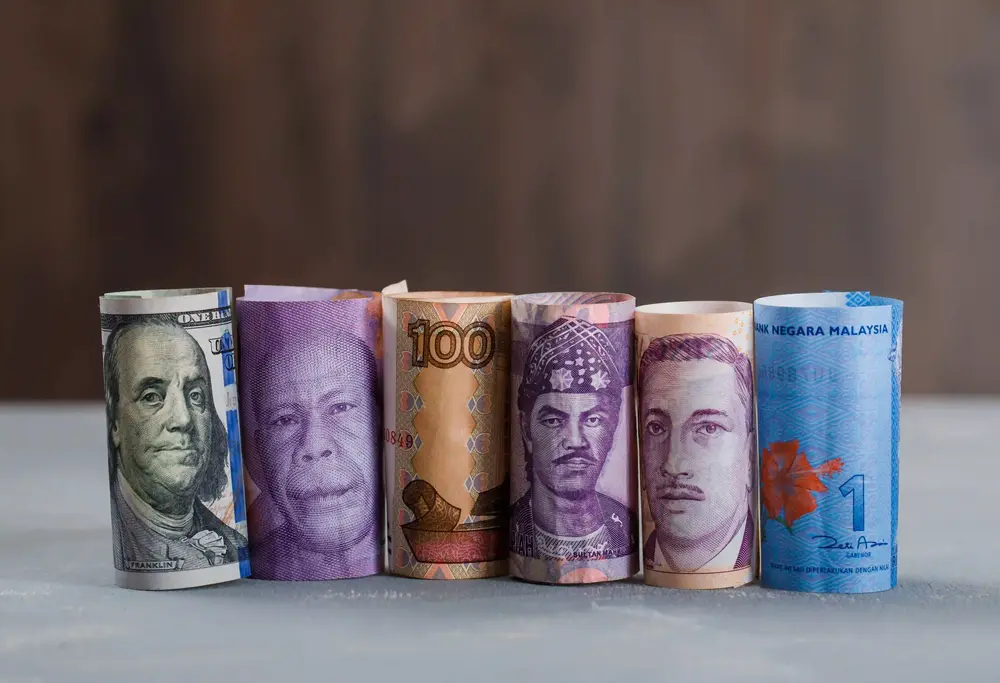
While casually scrolling through the news this morning, I came across some news that the “Garuda” is looking a bit weak. Yup, news about the low Rupiah has been making headlines everywhere lately. The level even touched figures that have caused many to take a long, deep breath.
This phenomenon naturally makes us all wonder: “Gosh, is it better to sell Dollars now to make a profit, or should I buy them in bulk before they get even more expensive?”
Well, before you rush to the money changer, let’s dissect the situation with a cool head but keep it fun!
What’s Actually Happening with the Low Rupiah?
 The current low Rupiah condition isn’t without reason. If we peek at the Dollar to Rupiah today data, the numbers indeed show a “mighty” performance from the US Dollar. There is a combination of external sentiment—such as high interest rate policies in America—coupled with internal dynamics within the Indonesia economy.
If we dig deeper, this weakening is also triggered by the high demand for Dollars in the domestic market. Many local companies need to settle foreign debts in Dollars, added to the capital outflow as global investors seek safety in US assets. Not to mention the geopolitical conditions in the Middle East that have driven world oil prices up, which automatically pressures our trade balance.
One highlight is how Bank Indonesia continues to step up to maintain stability. BI isn’t just staying quiet, you know. They are actively intervening in the market so that these fluctuations don’t turn into a nauseating rollercoaster. BI usually enters the Domestic Non-Deliverable Forward (DNDF) market to ensure liquidity remains maintained. But then again, in a global market, there are so many factors, ranging from commodity prices to unpredictable geopolitical matters.
Low Rupiah, Check the Rates First: Dollar to Rupiah Today
For those of you who frequently convert Dollar to Rupiah, you surely know that a difference of just a hundred Rupiah can feel significant, especially for large transactions. Currently, the movement of Rupiah to Dollar is indeed in the red zone for our currency.
Pro Tip: Don’t just fixate on a single number on Google. Always check the JISDOR rate from Bank Indonesia or your banking application to get more accurate real-time figures before making large transactions. Remember, you also need to pay attention to the difference between the buying and selling rates (spread) so you don’t lose out along the way.
Strategies During Low Rupiah: Buy or Sell?
Here is the million-Rupiah (or million-Dollar?) question. The answer actually goes back to your risk profile and needs. Let’s create the scenarios:
- Team “Buy” (Buy Dollars)
If you have plans for a vacation abroad at the end of the year or need to pay for tuition overseas, buying in installments now might not be a bad idea. Even though the Rupiah is low, there’s no guarantee it will strengthen immediately tomorrow. Rather than feeling “regret” later if the rate soars further, buying gradually (DCA – Dollar Cost Averaging) can be a safe move.
- Team “Sell” (Sell Dollars)
For those of you who have been saving Dollars since the rate was still in the early teens, congrats! This could be the moment to take profit. Converting your “green” savings back to Rupiah during a low Rupiah period can provide a very decent extra profit for adding business capital or simply diversifying into other investment instruments within the country. Especially if you see a trend where the exchange rate is starting to peak, selling now is a smart move.
Indonesia Economy Condition: Is it Still Safe?
 Even though the exchange rate is making people nervous, the fundamentals of the Indonesia economy are actually still considered solid. Our foreign exchange reserves are also still in a strong position to support Bank Indonesia’s intervention.
Our economic growth is still around 5%, and inflation is still under close monitoring. So, this low Rupiah phenomenon is more about global currency pressure (the strong dollar phenomenon) rather than a sign that our economy is “collapsing.” Global investors, in fact, still look at Indonesia as an attractive investment destination due to maintained political and macroeconomic stability.
Low Rupiah: Don’t FOMO and Keep Monitoring the Latest Rates!
Facing this dynamic exchange rate situation, there is only one key: Don’t FOMO (Fear of Missing Out).
- Keep Monitoring: Always check Rupiah to Dollar updates regularly through trusted financial news sources.
- Use the Right Tools: Utilize the convert Dollar to Rupiah feature in your financial apps to compare the best rates.
- Adjust to Your Needs: If it’s just for short-term speculation, the risk is quite high. But for long-term needs, take your time.
 Now, whatever your choice, whether you are #TeamSellDollar or #TeamBuyDollar, when it comes to international currency exchange that is trusted, practical, easy, and fast with competitive rates, leave it to the Money Changer Kuta: PAM Money Changer! PAM Money Changer is a Money Exchange Kuta, Bali, that has been an officially licensed PVA since 2003, making its credibility trustworthy.
As a Money Changer Bali trusted since 2003 with 5 branch outlets spread out, PAM Money Changer has transparent and competitive rates, so you no longer need to worry about the risk of scams, hidden additional fees, or dollar counterfeiting that often occurs in illegal places. You can always monitor the rates, which are up-to-date and fresh, on the official PAM Money Changer website!
The world of finance is indeed like a romance; sometimes it’s up, sometimes it’s down, but the important thing is that we know how to navigate it. So, have you decided whether to be: team save Dollars or team back to Rupiah today?
Whatever the choice, make sure it’s based on data, not just following the FOMO in WhatsApp groups. Whatever your choice regarding the dollar in the current situation, leave your foreign exchange matters to the trusted Money Changer Bali: PAM Money Changer!
Read also:
- Gold vs. Forex: Which Is the Best Hedge as Rupiah Weakens?
- Why Do Exchange Rates Change Daily? Money Changer Secrets!
- Rupiah Redenomination & The Impact for Indonesia Economy
- Got Old Rupiah? Here The Guide How to Exchange It!


