

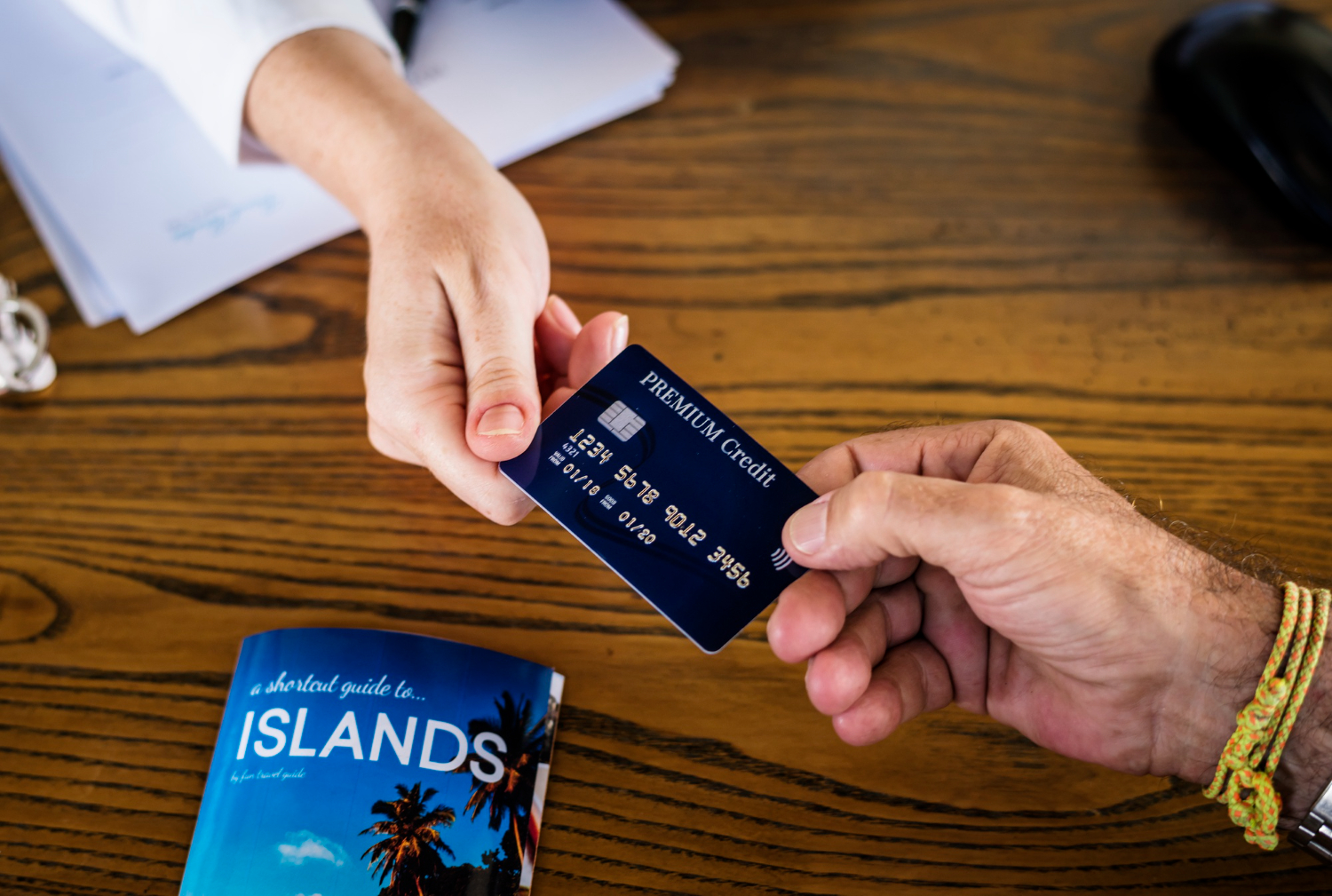
The website for that Seminyak beach club says “we accept all major credit cards.” The menu at the Ubud organic café has a Visa sticker on the door. Your hotel confirmed they take Amex. So you land in Bali with a credit card, a backup debit card, and IDR 500,000 in cash for emergencies.
By day three, you have been to five ATMs, paid IDR 250,000 in withdrawal fees, and learned a lesson that every Bali traveler eventually learns: the sticker on the door and the reality at the counter are two different things.
The Card Acceptance Landscape
Bali’s card acceptance splits into three tiers with very little overlap between them.
Hotels, resorts, and high-end restaurants almost always accept cards. Visa and Mastercard are standard. American Express acceptance is less common even at upscale venues, and when it is accepted, the staff may need to find the one terminal that handles it. Mid-range restaurants, boutique shops, and beach clubs are a coin flip. Some do, some do not, and there is no reliable way to predict which without asking. Local warungs, markets, street vendors, parking attendants, scooter rental shops, and small massage places are universally cash-only. No exceptions. No “but last time they took my card.” They never do.
The Surcharge Nobody Mentions
When a Bali business accepts credit cards, the customer often pays a hidden cost. Indonesian payment processors charge merchants 2 to 3 percent per card transaction. Many businesses pass this cost directly to the customer as a “card surcharge” or “service fee.”
Some businesses disclose this upfront with a small sign at the register. Many do not. You discover the surcharge only when you see the total on the terminal or your statement.
A IDR 500,000 dinner with a 3 percent surcharge costs IDR 15,000 extra. That is about AUD 1.50, or one extra Bintang. Not a crisis. But across a week of meals, activities, and shopping, those surcharges add up to IDR 150,000 to 300,000. That is a full day’s scooter rental or a very good massage.
The surcharge is not a scam. It is the merchant’s cost of doing business with card payments in Indonesia. But it is a cost you pay, and it tilts the math toward cash for daily transactions.
The Terminal That Never Works
Every traveler in Bali eventually encounters this scene: you finish a meal at a restaurant that clearly accepts cards. You hand over your Visa. The server nods, walks to the counter, and returns five minutes later with an apologetic look. “Sorry, the machine is not connecting.”
Sometimes the machine is genuinely down. Indonesian payment terminals rely on mobile data or patchy Wi-Fi, and Bali’s internet infrastructure can be inconsistent. Sometimes “the machine is not connecting” is code for “we prefer cash and this is easier than explaining the surcharge.” Either way, you need backup rupiah.
Having cash ready in these moments prevents the awkward walk to the nearest ATM while your food gets cold.
Where Cards Make Sense
Despite the limitations, credit cards are the right tool for specific Bali transactions.
Hotel deposits and resort payments should always go on a card. The pre-authorization protects you from disputes, and the exchange rate on your card is usually better than the cash rate you would get at a money changer for large amounts. Online bookings for tours, ferries to the Gilis or Nusa Penida, and domestic flights are best paid by card before you arrive.
Large restaurant bills at established venues where no surcharge is mentioned also make sense on a card. The rate is competitive and you avoid carrying large amounts of cash to dinner.
Where Cash Wins
Every transaction under IDR 200,000 should be cash. Warungs, Gojek drivers, temple entries, market purchases, laundry services, scooter parking, beach chair rentals. The total value of these transactions across a week easily exceeds your hotel bill, and every single one requires physical rupiah.
Cash also wins at businesses that apply card surcharges. If you are paying 3 percent extra for the convenience of tapping a card, and the money changer spread for getting that cash was 2 percent, cash is cheaper by 1 percent. Over a week of spending, that 1 percent compounds.
The ATM Trap That Catches Card-Dependent Travelers
Travelers who arrive counting on their card for everything quickly learn an expensive lesson. They need cash for daily life, so they hit ATMs repeatedly. Each withdrawal costs IDR 50,000 locally plus their home bank’s foreign fees. If they withdraw small amounts because they are not sure how much they will need, they pay those fees multiple times.
A traveler who makes five ATM withdrawals of IDR 1,500,000 over a week pays IDR 250,000 in local fees alone, before any home bank charges. The same traveler who exchanges AUD 500 at a money changer once for the entire week pays roughly AUD 10 to 15 in spread, or about IDR 100,000 to 150,000.
The ATM-dependent traveler pays more to access less money.
The Strategy That Works Every Time
Before your trip, notify your bank that you will be using your card in Indonesia. Blocked cards from fraud detection are common and resolving them from a Bali hotel room with spotty Wi-Fi and international calling rates is not how you want to spend a vacation morning.
Bring two cards from different networks if possible. A Visa and a Mastercard, or a credit card and a debit card. If one network has a processing issue in Indonesia, the other likely still works.
Load a travel-friendly card like Wise or Revolut with your travel budget before leaving. These cards offer better exchange rates than traditional banks and often waive some foreign transaction fees.
Bring clean, large-denomination foreign currency notes for exchange at a licensed money changer. This is your cash supply for daily transactions. Exchange enough for three to four days at a time, keeping the rest in your hotel safe.
Use the credit card for hotels, online bookings, and large restaurant bills. Use cash for everything else. This hybrid approach minimizes fees, maximizes convenience, and ensures you are never stuck without a payment method.
The Bottom Line
Credit cards work in about half the places tourists spend money in Bali. The other half runs on cash, and those are disproportionately the places that make a Bali trip feel like a Bali trip. The tiny family warung with the best nasi campur on the island. The surf instructor at Batu Bolong. The old woman selling sarongs at Ubud Market. The parking attendant who remembers you from yesterday.
Cards are for transactions. Cash is for experiences. Bring the right tool for each.


