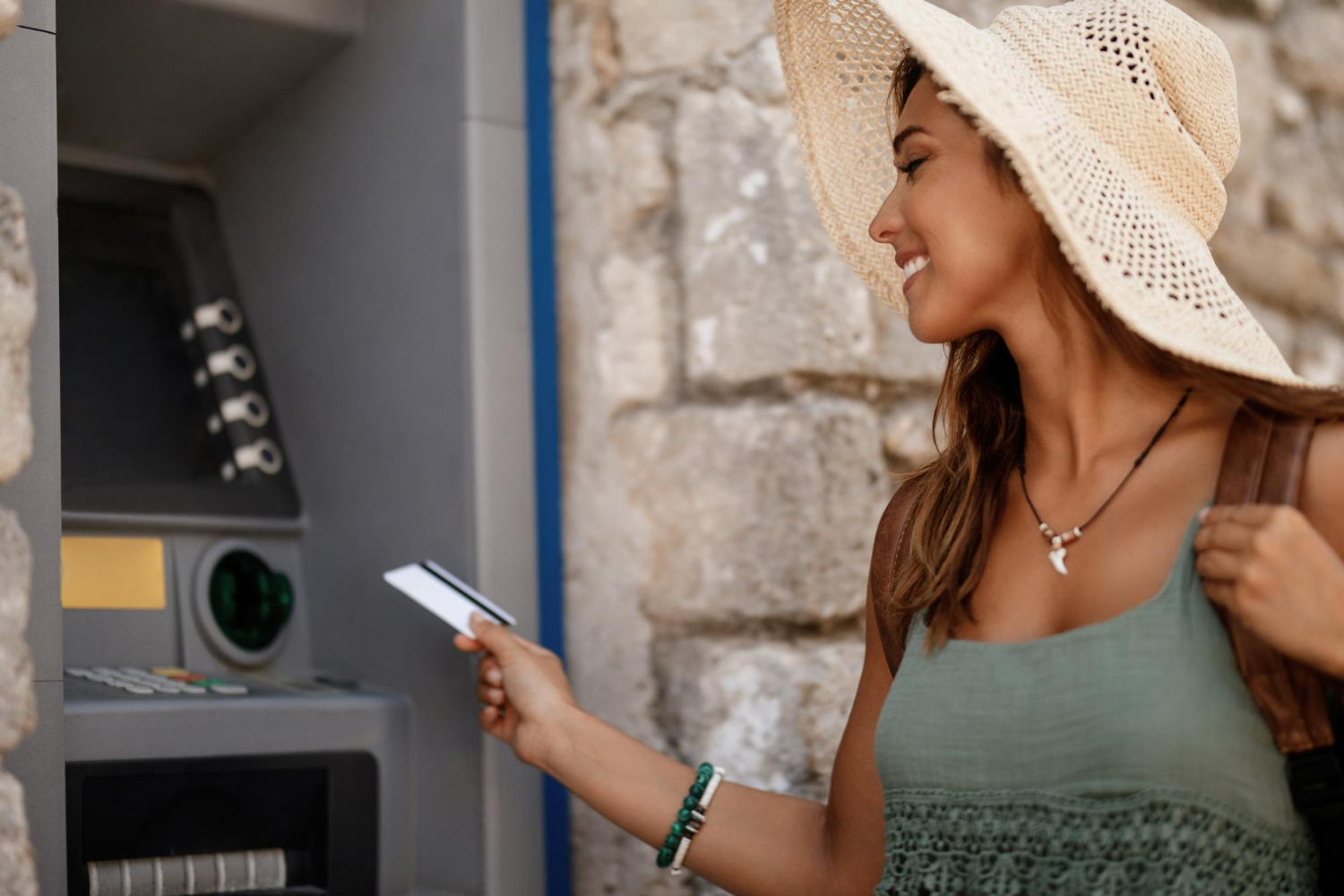
For most of the last decade, the standard advice for traveling with money was to split it up: a little cash, a main card, and a backup card hidden somewhere in your bag. Tap-to-pay, phone wallets, and QR payments have quietly changed how people actually travel. A growing share of visitors now land in Bali carrying a single card, or even just a phone, and treat physical cash as an afterthought. Contactless terminals are everywhere from Seminyak cafes to Canggu coworking spaces, and a quick phone tap has replaced the ritual of counting out rupiah notes.
The convenience is real, and so is the risk. When your whole financial life on the road sits in one card slot or one phone, losing that wallet no longer means losing a bit of spending money. It can mean losing your only way to pay for a hotel, a taxi, a meal, and the flight home. The lost wallet problem has quietly become more disruptive than it was a decade ago, and the fix is no longer as simple as “find an ATM.”
This is an emergency action plan, not a prevention lecture. If your wallet or card is already gone, here is exactly what to do, in order, to stop the damage, get your hands on emergency money, and turn it back into cash you can spend in Bali.
The first ten minutes: confirm what is actually gone
Before you freeze anything, work out what disappeared and what you still control. People often freeze the wrong card or forget that a spare card was never in the lost wallet at all.
- Retrace your last hour. Check the room safe, the bag you used at breakfast, the ride you took, and the front desk. A surprising number of “stolen” wallets in tourist areas turn out to be misplaced, and a quick retrace beats spending an afternoon on the phone with your bank.
- If your phone is also gone, lock it remotely and mark it as lost through your device’s find-my service. A phone wallet such as Apple Pay or Google Pay is usually protected by the device lock, but lock the device anyway so no one can try.
- List every card that was in the wallet. Write down the issuer and the last four digits if you have them. You will need that list for the calls in the next step.
Do not spend an hour retracing if you genuinely suspect theft. Ten minutes is enough to check the obvious places. After that, move straight to freezing your cards, because a stolen card can be used in seconds, long before you finish searching.
Hour one: freeze every card, then cancel only what you must
This is the step that actually limits your losses, and it should happen before anything else. The order matters more than most travelers realize.
First, freeze. Open your bank or card app and use the instant freeze feature. Nearly every major card app has one, and it stops new transactions while keeping the account alive. Freezing is reversible, which makes it the safest first move: if your wallet turns up an hour later under a beach towel, you simply unfreeze and carry on.
Second, call the issuer. Freezing in the app blocks card transactions, but you should still report the loss to the issuer’s 24-hour emergency line. For most travelers, the moment to cancel a card abroad in Bali is the moment you realize it is gone, and this call is how you do it properly. Reporting the card matters for two reasons: it flags the account so the issuer will not hold you responsible for future charges, and it triggers the replacement process.
A quick note on language. Telling the issuer the card was “stolen” rather than “lost” can change how they treat the account. If there is any chance it was taken, say stolen. The issuer may then cancel and reissue rather than simply freeze, which is exactly what you want when you cannot account for who might have it.
Third, keep one line open. If you are traveling with a partner, freeze only the cards that were actually at risk and leave one working card untouched if it was never in the lost wallet. The goal of this hour is to stop the damage without cutting off your last way to pay. If every card is gone, the next two sections cover how to get money anyway.
While you are on the phone, ask the issuer two questions: whether they offer emergency card replacement to Indonesia, and whether you can arrange an emergency cash advance. Many issuers will courier a replacement card to a Bali address within a few business days, and some will release cash through a partner network. Availability varies by bank and by country, so ask directly rather than assuming either option exists.
Know exactly what money you still have
Once the cards are frozen, take stock. Your entire emergency plan depends on what is left, and most people who think they “lost everything” still have one working path.
- A spare card. If you packed a second card somewhere separate, it is now your primary card. Treat it that way, and do not carry it loose in the same pocket that just got emptied.
- A phone wallet. If your phone survived, Apple Pay, Google Pay, or a similar wallet may still work at contactless terminals in Bali. Just remember that phone wallets are not accepted everywhere, and plenty of Balinese businesses still want cash.
- A travel partner or a friend. A trusted person who can lend you cash, or receive a transfer on your behalf, is the fastest bridge in an emergency.
- Leftover foreign cash. If you brought US dollars, Australian dollars, or euros and kept a small reserve, those notes still have value and can be converted locally in minutes.
The point of this step is to stop assuming you have nothing. Work out your single surviving payment path first, because everything after this is about feeding money into it.
How to get emergency money while traveling
Replacement cards take days. Rent, meals, and a hotel balance do not wait. Here is how to get money moving again in the meantime, ordered from fastest to slowest.
Use the spare card at an ATM. If a second card survived, this is the simplest path. Withdraw rupiah in a sensible amount, and keep in mind that an ATM withdrawal in Indonesia may come with a machine fee plus your home bank’s foreign transaction fee. Withdraw once, in a larger amount, rather than many small withdrawals, so those fees do not stack up. For a sense of how much you will actually need per day, see our guide to how much cash to bring to Bali.
Ask someone at home to send money to a person you trust here. This is the classic emergency transfer, and it works even when you have no card at all. A friend or family member sends money to your traveling companion or a local contact, that person collects it, and hands it to you. The catch is that you need someone on the ground you genuinely trust, and the sender needs a service that reaches Indonesia. A bank transfer from abroad can take a few business days and comes with fees, so confirm the speed and the total before you commit. For the mechanics of moving money into the country, see our explainer on international bank transfers to Indonesia.
Use a money transfer service with cash pickup. Operators such as Western Union and similar services let someone send money to your name, which you then collect as cash at an agent location in Bali. This is the closest thing to an international cash lifeline, and it works when you have no card and no local bank account. The fees and the exchange rate vary by provider, by amount, and by day, so check the total before anyone sends; never assume a flat rate. What matters for your plan is simply that this option exists, and it is genuinely useful when every card is gone.
Send money to yourself through a digital account you already set up. If you use a multi-currency account or a travel card app, you may be able to move funds between your own wallets, then spend them through a linked card or transfer them to a local account. Whether this works depends entirely on which accounts you had in place before the loss, which is why it is a fallback rather than a guarantee.
The honest summary: your fastest emergency money is a spare card or a trusted person. The slowest is a fresh bank transfer from a home account that was never set up for international use. Work down the list in that order.
Turning emergency money into rupiah you can spend
Getting money is only half the problem. In Bali, you still have to convert it into cash you can actually use.
If you got rupiah from an ATM, you are done. If you collected a cash-pickup payout in rupiah, you are also done. But if you are holding foreign currency, a licensed money changer is the place to convert it.
Bali has plenty of exchange counters, and they are not all equal. The gap between a licensed changer and an unlicensed street counter is the gap between a posted, fair rate and an unknown one. A licensed changer displays its buying and selling rates, updates them with the market, and counts the notes in front of you. That matters more, not less, when you are already stressed and in a hurry.
This is where PAM Money Changer fits. PAM is a licensed PVA money changer in Bali, which means its rates are posted, its transactions are recorded and reported to Bank Indonesia, and its staff are trained to authenticate foreign banknotes before they touch your hands. If someone has wired you US dollars, Australian dollars, or euros, a licensed changer like PAM converts them into rupiah at the posted buying rate, with no guesswork about what you are getting. In an emergency, a counter you can trust is worth as much as the cash itself.
A note for card users: if your surviving card is a credit card rather than a debit card, check where it is actually accepted before you rely on it. Card acceptance in Bali is uneven once you leave hotels, malls, and larger restaurants. Many warungs, markets, and transport providers are cash only, which is exactly why this plan keeps pointing back to physical rupiah. For the full picture, see where credit cards work in Bali.
Lost card in Bali: the sixty-second checklist
If you have lost a card in Bali and are asking what to do, this checklist is the whole plan on one screen.
- Freeze every lost card in the app immediately.
- Call each issuer and report the loss or theft; cancel where you must.
- Lock your phone remotely if it is gone too.
- Identify your one surviving way to pay: a spare card, a phone wallet, or a person.
- Get emergency money through a spare-card ATM withdrawal, a trusted-person transfer, or a cash-pickup service.
- Convert any foreign cash at a licensed money changer.
- File a police report if theft is likely, for insurance and replacement claims.
- Keep receipts for emergency fees, transfers, and cash advances; your travel insurance may reimburse them.
That last point is easy to forget in the moment. Emergency transfer fees, courier charges for a replacement card, and cash-advance interest are all real costs of a lost wallet, and a decent travel insurance policy may cover some of them. The police report and the receipts are the paperwork that makes a claim possible, so collect them while the details are still fresh.
The next 48 hours and the road home
Once the immediate fire is out, a few loose ends remain.
A replacement card will not arrive overnight. Plan as if you will be cash-based for at least the next few days, and budget accordingly. This is one of the rare situations where the old travel advice genuinely applies: keeping some rupiah in cash is not paranoia, it is the difference between a bad afternoon and a ruined trip. For a fuller look at the choices that leave travelers stuck like this, see our roundup of money mistakes travelers make in Bali.
Tell your hotel or villa. If you cannot pay the balance on time because your card is gone, most hosts will work with you once they know, and being upfront is cheaper than a checkout-day surprise.
Check your travel insurance policy. Emergency cash advances, replacement-card courier fees, and theft losses are often covered, but only with documentation. Start the claim early, and keep every receipt.
Finally, once you are back on your feet, set up the backup you wish you had. The reason this article is an action plan rather than a prevention guide is that you needed to act, not be lectured. Still, the single most useful takeaway for next time is boring and quick: a second card kept somewhere separate from the first, plus a modest amount of emergency cash. That two-part setup turns a future crisis into a mild inconvenience.
A lost wallet in Bali is a solvable problem. Freeze fast, find your one remaining way to pay, get money moving through a person or a service you trust, and convert it at a licensed changer. None of those steps requires luck, only a clear order of operations. If you need rupiah in your hand from foreign currency someone sent you, PAM Money Changer is one of the licensed counters in Bali that can get you sorted at a posted, transparent rate, so you can get back to your trip instead of staying stuck in your hotel room.