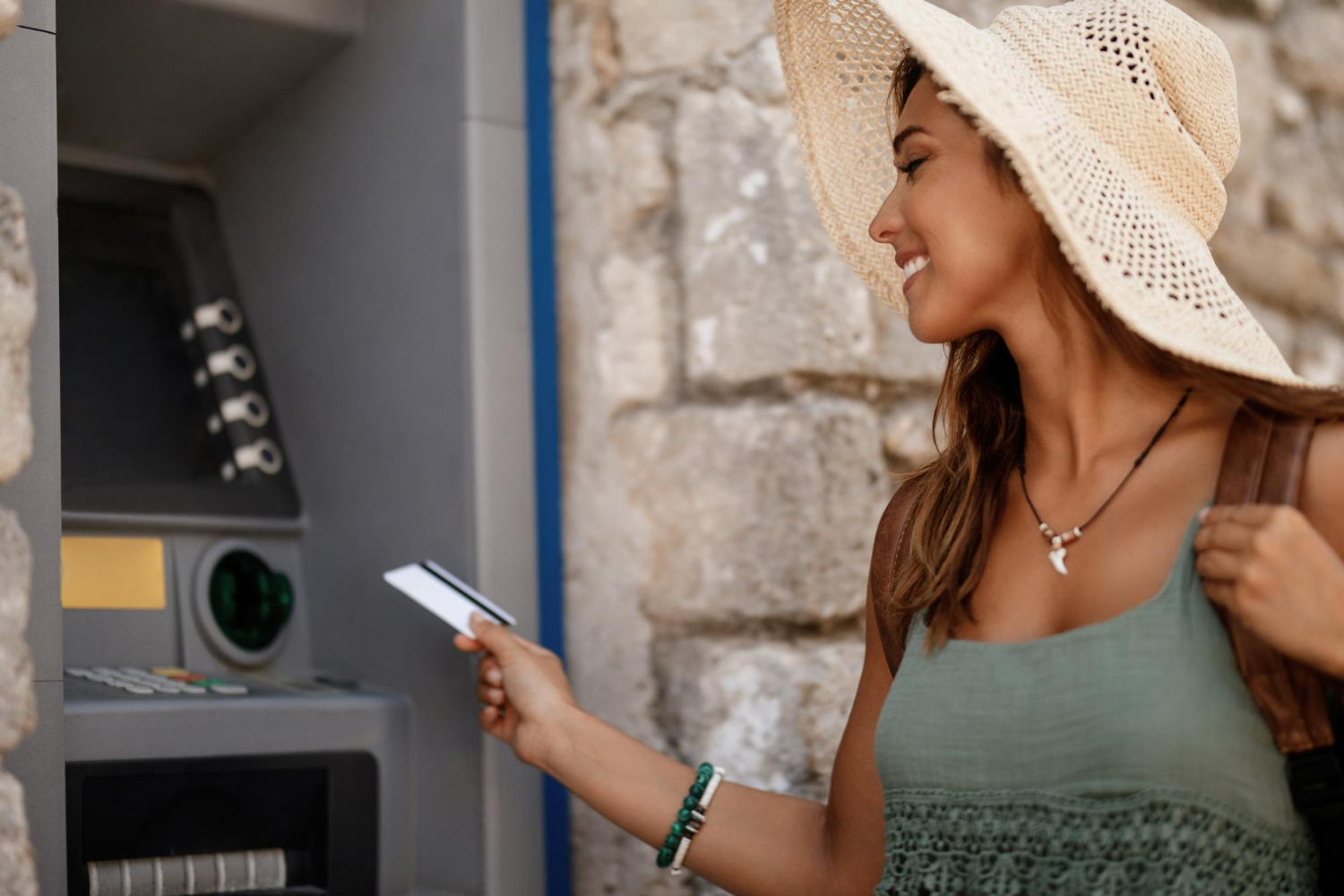
Every solo travel guide to Bali seems to open with the same warning: be careful, keep your head down, carry your cash close to your chest. The framing makes it sound like traveling alone in Bali is a dangerous gamble that requires a thick roll of rupiah stuffed somewhere secret.
Most of that framing is backwards. Bali is one of the more forgiving places on earth to travel by yourself, and the real solo travel Bali money problem is rarely the one people warn you about. It is not that strangers will hunt you for your wallet. It is that you, alone, have no second set of eyes, and a single moment of clumsiness or trust costs you everything at once if all your money lives in one place.
So this guide is not another list of dangers. It is a plan for carrying less, splitting what you do carry, and exchanging money in a way that keeps a single bad moment from ruining your trip. Manage the money well and the safety mostly takes care of itself.
The real risk is concentration, not danger
A solo traveler has one vulnerability that couples and groups do not: there is no backup person. If your partner leaves a card at a restaurant, you have yours. If a friend loses their cash on a night out, you spot them dinner. Alone, every failure is your failure, and every loss is a total loss if you kept everything in the same place.
Notice what this means for the advice you keep hearing. “Carry lots of cash so you always have enough” is exactly the wrong instinct for someone traveling alone. A big single stash is a single point of failure. The smarter solo traveler carries a modest amount in a few separate places, plus a card that lives separately from the phone that holds the digital version of the same card.
Concentration is also what makes small incidents feel big. A pickpocket who gets your one wallet has taken your whole trip budget. A pickpocket who gets your walking-around wallet has taken, say, Rp 300,000, and you shrug, reach into a zipped inner pocket, and keep going. Same event, completely different day.
How much cash should one person carry?
There is no magic number, but there is a useful way to think about it. Carry enough for a full day of ordinary spending, and keep the rest split and stored. That way you are never walking around with your entire trip in one pocket.
To make that concrete, work in rupiah and think in layers. For a casual solo day in Bali, a reasonable walking-around amount is often somewhere between Rp 500,000 and Rp 1,000,000, depending on whether you are eating at a warung or a sit-down restaurant, and whether you are renting a scooter or taking a ride. That is an illustrative range, not a rule; your own number comes from your own daily plan.
Here is the key discipline. Once you have a daily number, do not carry twice it “just in case.” The just-in-case money should live somewhere separate and stay out of your hand when you are paying for things. If you want a deeper dive on the total amount to bring for a whole trip, our guide to how much cash to bring to Bali walks through the daily math in more detail.
Split your money across three layers
This is the habit that does the most work for a solo traveler. Think of your money as living in three places, and never let a single interaction expose more than one of them.
The first layer is your walking-around cash, the day’s spending in an easy pocket. This is what you hand over at a warung, a market stall, or a convenience store. Keep it small and top it up from the second layer when you are somewhere private.
The second layer is your reserve, the larger amount in a zipped inner pocket, a money belt, or a separate card you leave in your room safe. This is what you do not touch while you are out. It is the difference between “I lost my day money” and “I lost my trip.”
The third layer is your card plus your phone. These should almost never be in the same physical place. If your phone is in your hand or your back pocket, your physical card should be in a front or inner pocket, not in the phone case. A phone case is the worst place for a card, because a phone is the thing a solo traveler is most likely to leave on a table, drop, or hand to a stranger for a photo.
Here is a simple worked example, clearly labeled as an illustration. Say you plan to spend around Rp 800,000 in a day. You might keep Rp 400,000 in your walking-around wallet, Rp 200,000 in a zipped inner pocket, and the rest on a card stored separately from your phone. If you lose the wallet, you are out Rp 400,000 and you still have a working day ahead of you. If you had kept Rp 800,000 in one wallet, the same loss is your whole day.
Solo ATM habits that keep you covered
Using an ATM alone deserves its own small set of rules, mostly because an ATM is the one place you visibly withdraw a lot of money in a public spot.
Withdraw during daylight and in a busy, well-lit location. A bank lobby or an ATM inside a supermarket or minimart is better than a standalone machine on an empty street at night. Take the cash, put it away before you step out of the booth, and count it later somewhere private, not while standing at the machine.
There is a second, less obvious reason this matters alone: ATM fees and withdrawal limits. If you take out tiny amounts repeatedly to stay “safe,” the per-withdrawal fees quietly eat your budget. If you take out a lot at once to avoid fees, you are walking around with more cash than you want. Splitting across a physical card and a travel card gives you two sources, so you can withdraw a sensible amount and keep the rest on the card. For the fee mechanics, see our guide to ATM fees in Bali.
A practical solo habit is to treat a withdrawal as a top-up of your reserve layer, not your walking-around layer. Take out what your room safe or inner pocket can hold comfortably, then feed the small walking-around amount from that reserve each morning. You rarely need to touch an ATM more than a couple of times a trip if you do this.
Exchanging money alone: a short checklist
Exchanging cash is the moment a solo traveler is most likely to feel rushed, because you are handling foreign banknotes in a busy shop with someone watching you count. A short, repeatable checklist removes the pressure.
First, pick a licensed changer with a proper counter and a posted rate board, not a street runner or a back-room shop. A licensed operator has fixed premises and displays buying and selling rates, which alone filters out most of the worst options. We have a full guide on how to choose a money changer in Bali if you want the longer version.
Second, agree on the number before you hand over your cash. You say how much you are changing, they show you the rupiah total on a calculator or the counter, and only then do you hand anything over.
Third, count your rupiah yourself, in your own hands, while still at the counter. Do not let anyone take the money back to “recount” it, and do not pocket it half-counted because you feel watched. A licensed changer expects you to count; it is part of the transaction.
Fourth, put the money away before you leave. Step to the side, close the envelope or zip the pocket, and then walk out. The person who flashes a thick stack of rupiah on the sidewalk is the one who becomes a target, not the person who counts quietly and puts it away.
Solo female travelers: a few extra guardrails
The question behind “solo female travel bali safety” is almost always the same: how do I do all of this without feeling watched, followed, or targeted. Most of the answer is the layering above, plus a couple of habits that matter more when you are a woman alone.
Avoid the “one big wallet” and the back pocket entirely. A crossbody bag worn toward the front, or a small zipped pouch inside your bag, beats a clutch or a backpack you cannot see. When you pay, take out only what you need rather than opening your whole wallet and showing the stack.
After an exchange or a big withdrawal, do not immediately walk a long, unfamiliar route alone. Stop somewhere visible for a few minutes, like a cafe or a shop, and sort your money there. It breaks any sense that you have just collected cash and are now an easy mark.
None of this is about Bali being unusually dangerous. It is about removing the small, avoidable moments of exposure that a solo traveler, man or woman, does not need to accept. The point of the layering is that your safety plan and your money plan become the same plan.
What a solo trip to Bali actually costs
Budgeting alone is different from budgeting for two, and it is about more than halving the number. Solo costs run a little higher per person on some things, because you cannot split a room or a ride, and a little lower on others, because you eat and move exactly how you want.
For a rough solo trip Bali cost picture, think in daily blocks. A modest solo traveler eating at local warungs and staying in a simple guesthouse can often get by on somewhere around Rp 600,000 to Rp 900,000 a day all in. A more comfortable version with a private room, a scooter rental, and sit-down meals pushes toward Rp 1,200,000 to Rp 1,800,000 a day. These are clearly labeled illustrative ranges, because prices move with season, location, and your own taste; your real number comes from your own bookings.
The solo-specific insight is that you have more control over the variable, because no one else is negotiating with you. One day you spend Rp 300,000 and the next Rp 1,200,000, and the average is what matters. For the day-by-day breakdown, the how much cash to bring to Bali guide is the natural next read.
Mistakes that cost solo travelers the most
Some money mistakes hurt more when there is no one else to catch them. Three stand out.
The first is keeping everything together, which we have covered. The second is over-withdrawing from ATMs to dodge fees, then walking around heavy with cash. The third is trusting a too-good exchange rate from an unlicensed operator precisely because you are alone, tired, and want the transaction over with. The rush to finish is how a solo traveler gets a bad deal, and it is almost always avoidable by slowing down at the counter.
There is a full catalog of these traps, with how to avoid each one, in our guide to money mistakes travelers make in Bali and how to avoid every one. Read it before you land and you will recognize the moments as they come.
The short version
Carry a modest amount in your hand, keep your reserve split and hidden, keep your card away from your phone, and count your money yourself before you leave the changer’s counter. That is the whole solo travel money and safety plan. It is less about protecting yourself from Bali and more about making sure that any single bad moment, which can happen to anyone anywhere, stays a small one instead of a trip-ending one.
When you do need to exchange, a licensed counter where you can count your rupiah in peace makes the checklist above easy to follow. That is what PAM Money Changer offers at its Bali branches: a fixed counter, a posted rate, and no pressure to rush. Exchange what you need, split it across your layers, and get back to the part of the trip you actually came for.