

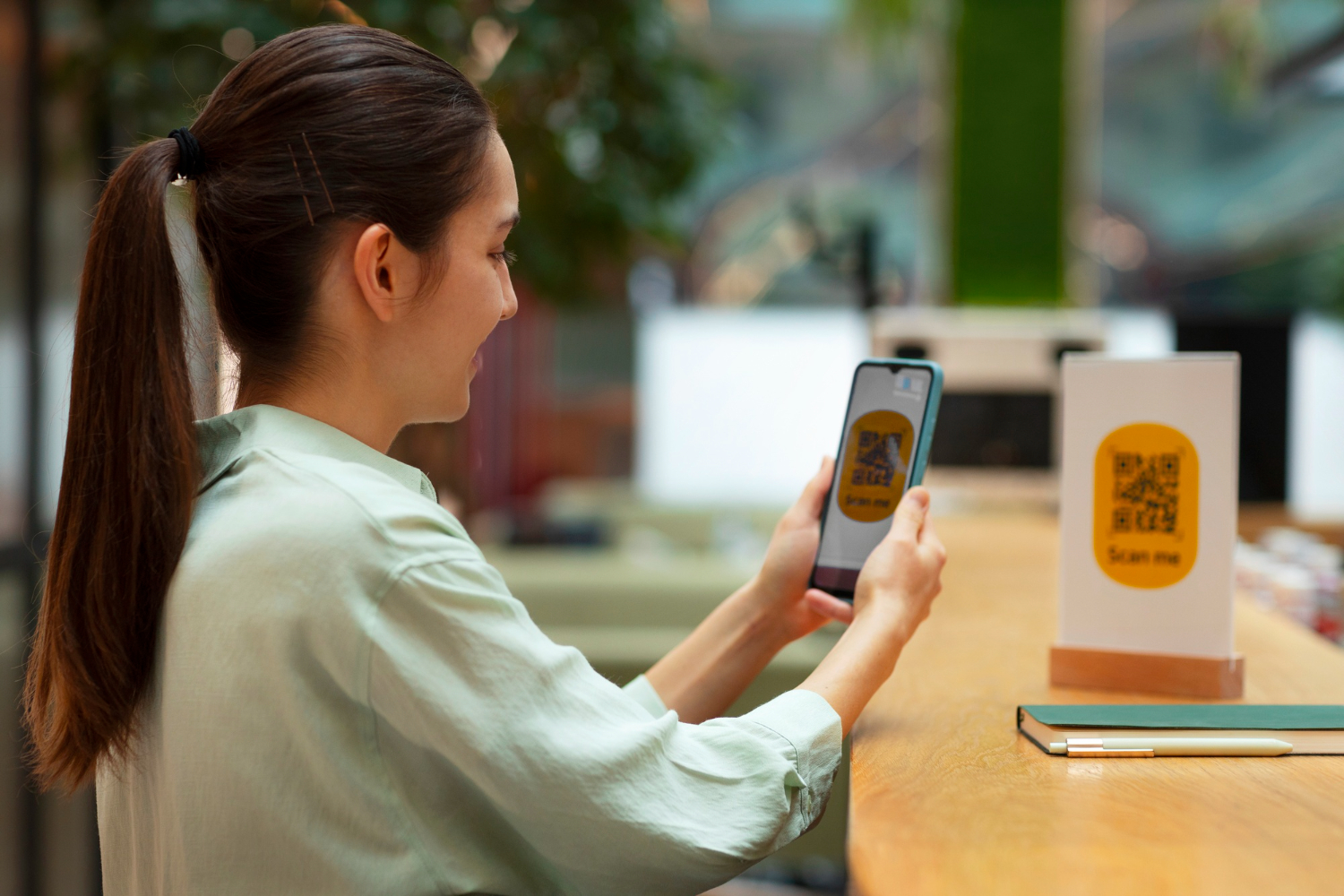
QRIS is Indonesia’s national QR payment standard, a single QR code that works across every bank and e-wallet in the country. If you have seen small blue and white QR stickers on counters, warungs, and market stalls across Bali, that is QRIS. Whether you can actually pay with it as a tourist depends on where you are from and which payment app you already have, and this guide walks through exactly that.
What QRIS Actually Is
QRIS stands for Quick Response Code Indonesian Standard. Bank Indonesia launched it in 2019 to merge dozens of competing payment QR codes into one, part of a wider push toward cashless payments that the central bank has been driving for years. Before QRIS, a GoPay user could not scan a QR code meant for OVO customers, and a DANA user was stuck at any counter that only displayed a QR from a different provider. QRIS solved that by making one code readable by every licensed payment app in the country.
For a merchant, QRIS is simply a way to accept payment without a card machine. They display one QR code, you scan it with your phone, you confirm the amount, and the money moves instantly from your wallet or bank account to theirs. It is the closest thing Indonesia has to a universal contactless payment rail, and it is everywhere in Bali: cafes in Canggu, souvenir shops in Ubud, beach bars in Seminyak, even small fruit stalls and local warungs.
Can Tourists Actually Use QRIS?
This is the question most visitors actually care about, and the honest answer is that it is not straightforward. QRIS is designed primarily for people with an Indonesian bank account or a locally issued e-wallet. Those apps normally require local identification, an Indonesian phone number, and in many cases a local bank account to be fully verified.
That said, there are three real paths for a foreigner who wants to pay with QRIS in Bali.
Path One: A Local E-Wallet With Passport Verification
The big three local wallets, GoPay, OVO, and DANA, are the main ways people actually scan QRIS codes. For foreigners, the catch is verification. Each app has its own rules, and they change often. Some allow a foreign passport for a basic account, which lets you receive money and make small payments, while full features are held back until you link an Indonesian bank account.
In practice, many tourists find that topping up a local wallet is the bigger obstacle. You cannot always fund a GoPay or OVO balance with a foreign card, so you may need a local friend, an Indonesian bank transfer, or a cash top-up point to load money in. This is why a local wallet is more useful for long-stay visitors and digital nomads than for someone on a two-week holiday.
Path Two: Cross-Border QR Payment Links
Bank Indonesia has been linking QRIS with other countries’ payment systems under a cross-border QR program. Travelers from Thailand, Malaysia, and Singapore, and a growing list of other Southeast Asian countries, can in some cases scan a QRIS code using their home banking app or e-wallet, with the amount settled in their own currency.
This is the fastest way for a short-stay tourist to pay with QRIS without opening anything local. The coverage and the participating banks change frequently, so the reliable move is to check your home bank’s app for an international or cross-border QR feature before you fly, and to test one small transaction early in your trip rather than relying on it at a crowded counter.
Path Three: International Wallets and Aggregators
A handful of international payment apps have announced QRIS acceptance for their users, typically through partnerships with local acquiring banks. This is still rolling out and is inconsistent from one merchant to the next, so treat it as a bonus rather than a plan. If your usual travel card or wallet already works, QRIS may simply be an extra option rather than a necessity.
Where You Can Use QRIS in Bali
If you do have a working QRIS setup, you will find it accepted in far more places than cards. Here is where it shows up most.
- Restaurants and cafes in tourist areas almost always display a QRIS code, often next to the card terminal.
- Local warungs and markets lean on QRIS heavily, which is useful because these are also the places that often do not take cards at all.
- Convenience stores like Indomaret, Alfamart, and Circle K accept QRIS at the register.
- Transport and parking increasingly use QRIS for scooters, paid parking, and some ride payments.
- Attractions and entry fees at temples, beaches, and tourist sites sometimes list QRIS as a payment option alongside cash.
The pattern is clear: QRIS fills exactly the gap where cash used to be the only option. That is why it matters for visitors who want to go cashless in the places cards do not reach.
QRIS vs Cash vs Card: What Actually Makes Sense
For most tourists, QRIS is not a replacement for cash or card. It is a third option that shines in specific situations. A quick way to think about it:
- Cash still rules at the smallest stalls, for tipping, and for anything on the street. If a vendor does not display a QR code, cash is your only option.
- Cards work well at hotels, large restaurants, and supermarkets, but you will pay a foreign transaction fee and sometimes a dynamic currency conversion markup.
- QRIS is cheapest for local transactions because there is no card network fee and no foreign exchange markup on the payment itself, but only if you already have a funded local wallet or a cross-border link.
The real advantage of QRIS is cost and reach, not convenience of setup. Setting it up takes effort for a visitor, but once it works, it is often the cheapest way to pay at the places that matter most for daily spending.
How to Set Up QRIS Before or During Your Trip
If you want to give QRIS a try, here is a practical sequence that avoids the common dead ends.
- Check your home banking app first. Search for a cross-border, international, or scan-to-pay feature. If your country is linked with Indonesia’s QRIS, this is the zero-effort path.
- Download one local wallet. GoPay, OVO, and DANA are the main options. Sign up with your passport and see how far verification gets you before you commit.
- Solve the top-up problem before you need it. A wallet with no balance is useless. Confirm you can load money with a card, a transfer, or cash at a top-up point before you rely on it.
- Test with one small purchase. Buy a bottle of water or a coffee and scan a QRIS code once. If it works, great. If not, you have lost nothing and can fall back to cash.
- Keep cash as your backup. Even a working QRIS setup will hit a merchant who only takes cash, so never leave your accommodation with an empty wallet.
What It Costs
QRIS transactions are generally free or very cheap for the person paying. There is no card network fee, and for a local wallet payment in rupiah, there is no foreign exchange markup on the transaction itself. Your only real costs are whatever it takes to get money into the wallet in the first place, whether that is a top-up fee, a transfer fee, or an unfavorable rate when you fund it from a foreign card.
This is the quiet advantage of QRIS over cards. A card purchase in Bali can carry a two to three percent foreign transaction fee on top of the exchange rate. A QRIS payment from a local wallet avoids both. For a long stay, those differences add up quickly.
The Bottom Line
QRIS is genuinely useful in Bali, but it is built for residents first and tourists second. If you are from a country linked to Indonesia’s cross-border QR program, or if you are staying long enough to justify setting up a local wallet, it is worth the effort and will save you money on daily spending. If you are on a short holiday, cash and a good travel card remain the simpler tools, with QRIS as a nice option when it happens to work.
Either way, you will still need physical rupiah at some point. Warungs, small vendors, and tips all still run on cash, and when you need to convert money, a licensed money changer gives you a better rate than an airport kiosk or a hotel desk. We cover how to compare those rates, and how to read a buying and selling rate board, in our guide on the difference between buying rate and selling rate.
Frequently Asked Questions
Do I need an Indonesian bank account to use QRIS?
Not always, but it helps. A local wallet with passport verification can work for basic payments, while full features and easier top-ups usually require an Indonesian bank account.
Can I use my foreign credit card to pay QRIS?
No. QRIS is a scan-to-pay rail for bank accounts and e-wallets, not a card network. You fund a wallet or use a cross-border app, then scan.
Is QRIS cheaper than using a credit card in Bali?
Usually yes, because it skips the card network fee and the foreign transaction fee. The comparison only matters if you can actually fund a wallet cheaply.
Do small warungs in Bali really take QRIS?
Many do. QRIS is common even at small stalls because it costs the merchant less than a card machine and removes the need to handle change.
What happens if my QRIS payment fails?
Keep cash ready. A failed or declined QR payment is usually a verification or balance issue, and in a busy warung, cash is the fastest fallback.
Planning your money before you fly matters more than which payment app you download. We have a full guide on how much cash to bring and how to split your spending between cash, card, and phone in our Bali payment method breakdown.


