

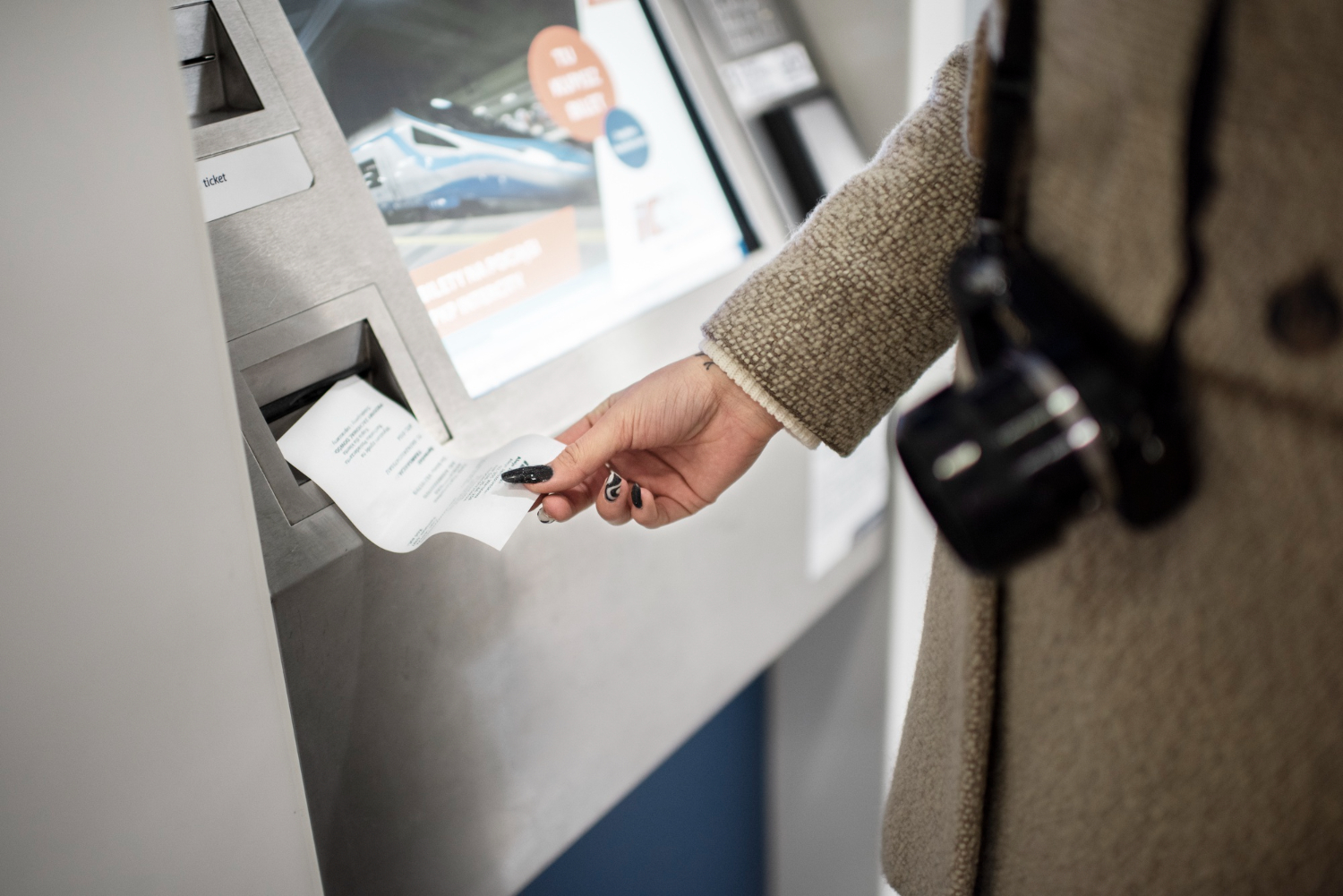
A traveler withdraws IDR 3,000,000 from an ATM on Jalan Legian. The screen says “Fee: IDR 50,000.” Three days later, their home bank statement shows a total debit of around AUD 310 for what should have been closer to AUD 285 at the mid-market rate. The missing money went to five different fees, only one of which appeared on the ATM screen.
That gap between what the ATM tells you and what you actually pay is the subject of this article. By the end, you will know exactly how an ATM withdrawal works in Bali, what to watch for, and whether you should be withdrawing cash at all.
Important: ATM fees, withdrawal limits, and bank policies described below reflect typical conditions for foreign cardholders in Bali. Your actual costs depend on your home bank, your card network, and the specific ATM operator. All figures are approximate and can change. Always verify with your bank before traveling.
The Visible Fee: What the ATM Screen Shows
Virtually every ATM in Indonesia charges foreign cardholders a per-transaction fee. This fee appears on-screen before you confirm the withdrawal. You must accept it to proceed.
The standard fee across major Indonesian banks is IDR 50,000 per withdrawal, roughly AUD 5, USD 3, or EUR 3 at current rates. This is consistent at the country’s largest ATM networks (Mandiri, BCA, BNI, and BRI), which collectively cover most machines you will encounter in tourist areas. A handful of smaller banks and international networks may charge slightly less, while independent convenience-store ATMs sometimes charge more.
The maximum withdrawal per transaction at Indonesian ATMs is typically IDR 1,250,000 to IDR 3,000,000, depending on the bank and the specific machine. Machines from the largest banks often allow IDR 2,500,000 per withdrawal, while others cap at IDR 1,250,000. You may need two or three separate transactions to withdraw a week’s worth of cash, paying the fee each time.
The Hidden Fee: Your Home Bank
This fee does not appear on any Indonesian ATM screen. It is charged by your own bank, in your home country, and you discover it only when checking your statement days or weeks later.
Australian banks typically charge a foreign ATM fee of around AUD 5 per transaction plus a foreign currency conversion fee of 2 to 3 percent of the transaction amount. On a IDR 3,000,000 withdrawal, that means roughly AUD 5 in ATM fees plus AUD 7 in conversion fees. Total: around AUD 12 in home-bank charges alone.
American and European banks vary widely. Some charge a flat fee per international ATM transaction plus a percentage in foreign transaction fees. Premium accounts and certain credit unions waive some or all of these fees. The range is broad enough that checking your specific bank’s international withdrawal policy before traveling is genuinely worth ten minutes of your time.
Add your home bank fees to the IDR 50,000 local ATM fee, and a single withdrawal in Bali can cost anywhere from AUD 8 to AUD 20 depending on your bank. That is per withdrawal.
The Dynamic Currency Conversion Trap
When withdrawing from an Indonesian ATM, you will almost certainly see a screen that says something like: “Accept conversion rate: AUD 1 = IDR 9,850?” with options for “Accept” or “Decline.”
Never accept this rate. This is Dynamic Currency Conversion, a service that converts the transaction to your home currency at a rate significantly worse than what your bank’s card network would provide. The markup on DCC rates runs 3 to 8 percent above the Visa or Mastercard wholesale rate.
Always choose “Decline” or “Without Conversion” when prompted. The transaction will still process, but in Indonesian rupiah rather than your home currency. Your bank will then convert at the card network’s rate, which is typically 0.5 to 1 percent above the mid-market rate. This is better than the 3 to 8 percent DCC markup every single time.
The Withdrawal Limit Problem
Indonesian ATMs cap per-transaction withdrawals, but the screen does not always make this clear until you try to enter an amount higher than the limit. If the machine allows IDR 2,500,000 maximum but you need IDR 7,000,000 for the week, that means three separate transactions. Three separate IDR 50,000 fees. Three separate home bank charges.
This is the structural cost of relying on ATMs for all your cash needs in Bali. You pay the local fee plus your home bank fee on every single withdrawal, regardless of the amount.
ATMs Versus Money Changers: The Break-Even Point
Here is the math that determines which method is cheaper.
A money changer charges a spread of 1.5 to 2.5 percent below the mid-market rate. On AUD 700 exchanged to IDR, the cost is roughly AUD 10 to 17 in lost value. That is the entire fee, paid once.
An ATM withdrawal has multiple costs: the local fee, your home bank’s foreign ATM fee, and your home bank’s currency conversion fee. If you need multiple withdrawals because of per-transaction limits, you pay these fees multiple times.
For a single withdrawal of AUD 700 equivalent: ATM costs roughly AUD 27, while a money changer costs roughly AUD 14. The money changer wins by about AUD 13.
If you need cash in smaller amounts throughout your trip, making five separate ATM visits, the math gets worse. Five sets of local and home bank fees. Total ATM cost: roughly AUD 60. Money changer cost for one exchange of AUD 700: roughly AUD 14. The money changer wins by AUD 46.
The break-even point depends on your bank’s specific fees. If your bank charges zero foreign ATM fees and uses the mid-market rate for currency conversion, a feature offered by a small number of travel-focused accounts, ATMs can be cheaper for small amounts because you avoid the money changer spread. For most travelers with standard bank accounts, money changers are cheaper for any meaningful amount of cash.
Quick Verdict: ATM or Money Changer?
Use an ATM when:
- You need a small amount of emergency cash and a money changer is not nearby
- Your home bank refunds all foreign ATM fees and uses mid-market rates
- You are withdrawing once for your entire trip and the per-transaction cap covers your needs
Use a money changer when:
- You need cash for a week or more of daily spending in Bali
- Your home bank charges foreign ATM fees or currency conversion markups
- You want to pay once and avoid per-transaction fees eating into your budget
- You have clean, large-denomination foreign currency notes ready to exchange
The cheapest combination for most travelers: use a fee-free travel card or your bank card for online bookings and hotel deposits, and exchange physical cash at a licensed money changer for everything else. Read our guide to buying vs selling rates so you know exactly what to look for on the rate board before you walk up to the counter.
Which ATMs to Use When You Must
If you do need to use an ATM, some are better than others.
The largest Indonesian bank networks (Mandiri, BCA, BNI, and BRI) operate the most ATMs in tourist areas and are generally the most reliable with foreign cards. Among these, Mandiri machines tend to offer the highest per-transaction withdrawal limits, often up to IDR 2,500,000. Their ATMs are located in Circle K and Indomaret convenience stores across Bali, making them easy to find.
If your card is rejected at one major bank’s ATM, try another network before assuming the problem is with your card. Different banks process foreign cards through different networks, and compatibility varies.
Avoid independent ATMs in convenience stores that are not branded with a major Indonesian bank. These machines often have higher local fees and may use unfavorable exchange rates even when you decline DCC. Avoid ATMs inside nightclubs, beach clubs, and bars, where fees can reach double the standard rate.
Four Ways to Minimize ATM Costs
Choose the maximum withdrawal amount every time. If the machine allows IDR 2,500,000, take IDR 2,500,000. You pay the same fixed fee whether you withdraw IDR 500,000 or the maximum. Fewer transactions mean fewer fees.
Decline dynamic currency conversion. Every time. Without exception. The rate your bank gives you is better than the ATM’s rate.
Use a travel-friendly bank account or fintech card that waives foreign ATM fees. A growing number of digital banks and select traditional banks offer accounts with no foreign transaction fees and ATM fee rebates up to a monthly limit. If you travel frequently, one of these accounts can pay for itself within a single trip.
Withdraw cash once for several days rather than daily small amounts. Keep the bulk in your hotel safe and carry only what you need for the day. This reduces your total number of ATM visits and the per-transaction fees that come with them.
Know Before You Insert Your Card
The ATM in Bali is a tool, not a strategy. It works well for one-off needs: you arrived late, the money changers are closed, and you need enough rupiah to get through the night. It works terribly as a daily cash source, where each withdrawal slaps on fees from two different financial systems on opposite sides of the world.
Before you land, take five minutes to check your bank’s international withdrawal policy. If they charge foreign ATM fees and currency conversion markups, plan to bring physical foreign currency and exchange it at a licensed money changer. If they do not (if you are lucky enough to have one of those rare travel-friendly accounts), the ATM becomes a genuinely useful option.
Either way, decide before you stand in front of the machine. The worst time to learn about ATM fees is while staring at a screen that asks you to accept a conversion rate you do not understand, with a queue of impatient travelers behind you and a driver waiting outside.


