

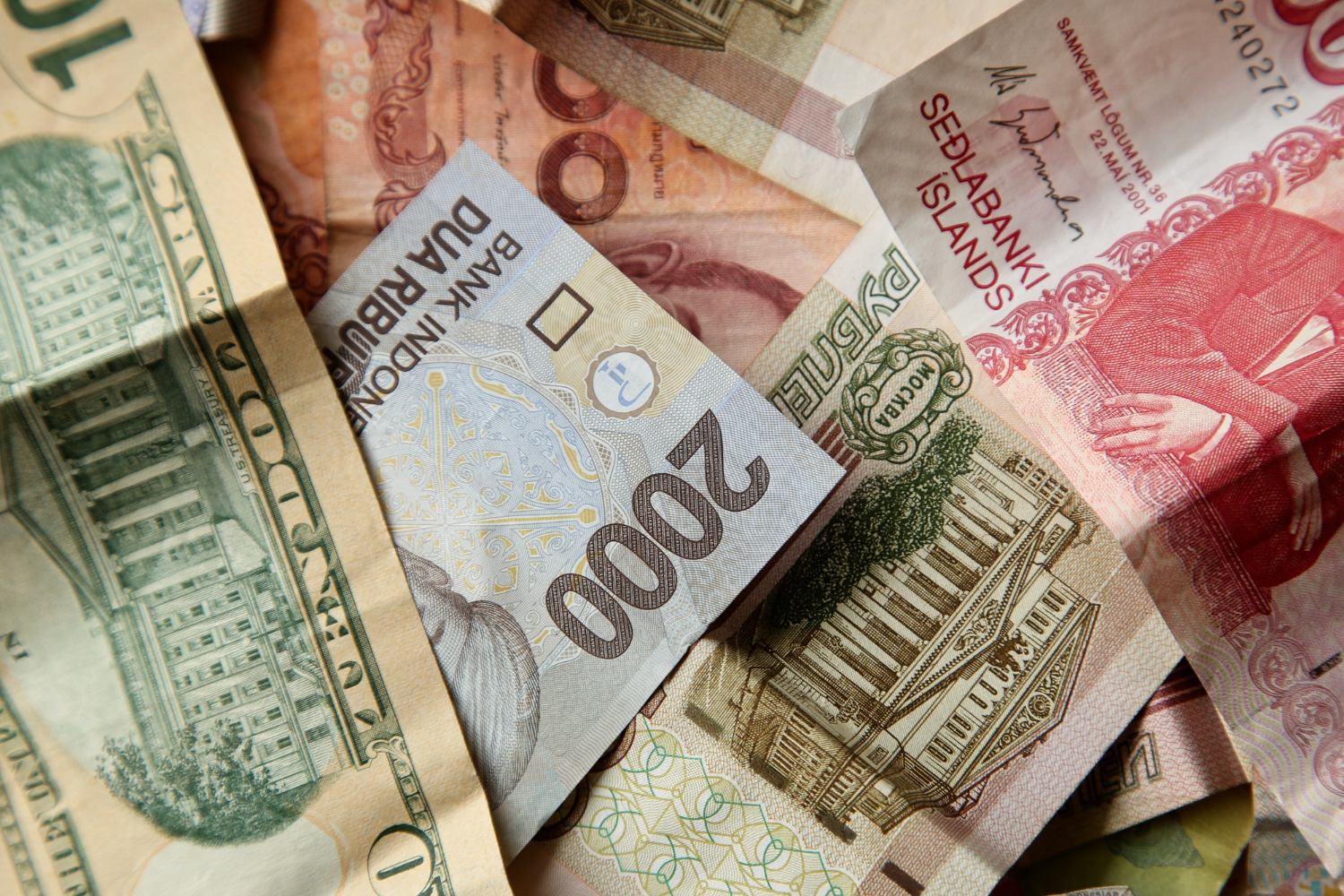
Sarah arrived in Bali with British pounds. Tom brought US dollars. Chloe carried Australian dollars. All three landed on the same day, went to the same money changer on Jalan Legian, and exchanged roughly the equivalent of GBP 500.
Sarah got IDR 9,450,000. Tom got IDR 9,380,000. Chloe walked out with IDR 9,610,000.
Same street. Same changer. Same value in home currency. A IDR 230,000 difference just from which currency each traveler happened to bring.
That difference is not random. It is math. And once you understand the math, you stop guessing and start keeping more rupiah.
The Short Answer, By Nationality
If you are Australian, bring Australian dollars. Clean, polymer, large-denomination notes get the best rates at Bali money changers. AUD is the most commonly exchanged foreign currency on the island after USD, and because Australian tourists dominate Bali’s visitor numbers, competition among changers keeps AUD spreads competitive.
If you are American, bring US dollars. Specifically, bring USD 100 bills. Smaller denominations like USD 20s and USD 10s frequently receive a lower rate, sometimes 1 to 3 percent below the rate for hundreds. The bills should be the newest design available. Torn edges, heavy wear, or pre-2006 series notes may be inspected more carefully or accepted at a reduced rate.
If you are European, bring euros. EUR 50 and EUR 100 notes are standard. Coins cannot be exchanged at any money changer in Bali. Smaller EUR notes below EUR 20 may receive a slightly lower rate but are generally still accepted.
If you are British, Singaporean, Japanese, Korean, or from any other country with a major convertible currency, bring your own currency. The conversion chain of GBP to USD to IDR introduces a second spread that costs you money. Direct conversion from your home currency to IDR is almost always cheaper.
If your home currency is not widely exchanged in Bali, bring USD or AUD. Which one depends on where you are from. Travelers from most Asian countries, the Middle East, Africa, and South America will generally find USD more widely accepted at better rates. Travelers from New Zealand and the Pacific Islands should bring AUD.
The Double-Conversion Trap
Here is the math that cost Sarah IDR 230,000 relative to Chloe.
When a money changer handles a major currency like AUD, USD, or EUR, they can sell that currency to Indonesian banks or other customers almost immediately. The spread between buy and sell is typically 1.5 to 2.5 percent. That is the money changer’s operating margin, and it is relatively thin because these currencies move fast.
When a money changer handles a less common currency like GBP, the spread widens to 3 to 5 percent. The money changer takes on more risk because they may hold that currency longer before offloading it. That wider spread comes directly out of the traveler’s final rupiah amount.
Now consider what happens if a traveler from a country with a minor currency brings USD instead of their home currency. They first convert their home currency to USD at their local bank, paying a spread. Then they bring USD to Bali and convert USD to IDR, paying another spread. Two spreads. Two separate profit margins stacked on top of each other.
A British traveler converting GBP to USD at a UK bank, then USD to IDR in Bali, effectively pays a combined 3 to 5 percent in spreads. Converting GBP directly to IDR at a Bali money changer costs 2 to 4 percent. The direct route wins every time.
Australian Dollars: The Bali Favorite
If there is a single currency that enjoys the best combination of wide acceptance and competitive rates in Bali, it is the Australian dollar.
Australia sends more tourists to Bali than any other country. Over 1.2 million Australians visited Indonesia in 2019, the overwhelming majority to Bali. That volume means money changers in Kuta, Seminyak, and Canggu compete aggressively on AUD rates. Spreads of 1 to 2 percent are common at well-reviewed licensed changers in high-traffic areas.
AUD notes are polymer, which means they survive beach bags, humidity, and the general chaos of tropical travel far better than paper-based currencies. Money changers appreciate this. A clean polymer AUD 50 or AUD 100 note is the closest thing to a universally welcomed foreign banknote in Bali.
One note of caution: older Australian paper notes from before the polymer transition are still legal tender but are not widely accepted by Bali money changers. Bring the plastic ones.
US Dollars: The Universal Backup
The US dollar’s advantage in Bali is not that it gets the best rate. It does not. AUD and SGD often beat USD spreads by a fraction of a percent. The advantage is that USD is accepted everywhere, by every money changer, at any time of day, with zero questions.
If your flight lands at midnight and the only open money changer near your hotel is a small kiosk, they will take your USD. They may not take your Norwegian krone or your Brazilian real, but they will take your US dollars.
Bring USD 100 notes. The rate difference between a USD 100 bill and a USD 20 bill at the same money changer can reach IDR 200 to 300 per dollar. On USD 500, that is IDR 100,000 to 150,000 in lost rupiah simply from the wrong denomination.
US dollar bills printed before 2006 are not necessarily worthless, but they draw extra scrutiny. Money changers in Bali are aware of counterfeit risks with older US currency designs. Bring the newest bills you have, with the large portrait and the blue security ribbon if possible.
Euros: Strong but Inconsistent
European tourists are the third-largest visitor group to Bali after Australians and Chinese travelers. The euro is widely accepted but with slightly less rate consistency than AUD or USD.
In Kuta and Seminyak, EUR rates are competitive and spreads run 1.5 to 2.5 percent. In smaller areas like Ubud or further north, the spread can widen to 3 to 5 percent because fewer money changers handle significant euro volumes. If you are carrying euros and heading outside the main tourist zones, exchange enough in the south before moving on.
EUR 500 notes were discontinued by the European Central Bank and cannot be exchanged in Indonesia. EUR 200 notes are accepted by some money changers but may take longer to process. EUR 100 and EUR 50 notes are standard and get the smoothest transactions.
The Currency You Should Not Bring
Small, non-convertible currencies from countries with limited trade with Indonesia will be difficult or impossible to exchange directly. If your home currency is not among the roughly 20 most traded currencies globally, plan to bring USD or EUR instead.
Traveler’s checks are effectively obsolete in Bali. They were common twenty years ago. Today, most money changers will not touch them, and those who do will offer a significantly worse rate than for cash.
Cryptocurrency cannot be directly exchanged for rupiah at any licensed money changer in Bali. Convert to fiat currency before arriving or use a crypto-backed debit card instead.
The Denomination Rule
This applies regardless of which currency you bring: larger notes get better rates.
A money changer’s business involves physically counting, verifying, sorting, and bundling banknotes. Processing one AUD 100 note takes the same amount of effort as processing ten AUD 10 notes. The difference is that the ten small notes take ten times as long to count and verify. The cost of that extra handling is reflected in the rate you receive.
For AUD, bring 50s and 100s. For USD, bring 100s. For EUR, bring 50s and 100s. For SGD, bring 50s and 100s. If your bank can only provide smaller denominations, ask for the largest available. The rate difference between denominations at the same money changer can be IDR 100 to 300 per unit of foreign currency.
Clean Notes Only
This cannot be overstated. Money changers in Bali inspect every banknote. Torn corners, heavy creases, ink marks, water damage, and excessive wear all reduce the rate or result in outright rejection.
Why? Because Indonesian banks are strict about the condition of foreign currency they accept for deposit. A money changer who accepts a damaged USD 100 note may not be able to deposit it. That risk is priced into the rate they offer you.
Before packing your travel cash, go through every note. If you would hesitate to hand it to a bank teller at home, do not bring it to Bali.
Making Your Currency Decision
Stand in front of your wallet or your home currency drawer. Identify your home currency. Check it against the following.
If Australian, bring AUD. If American, bring USD 100s. If European, bring EUR 50s and 100s. If British, bring GBP 50s. If Singaporean, bring SGD 50s and 100s. If from any of the following, bring your own currency: Japan, Korea, Canada, New Zealand, Switzerland, Saudi Arabia, UAE, Hong Kong, China. If from elsewhere, bring USD 100s or AUD 50s and 100s, whichever your local bank offers at the better rate.
Count approximately how much you will spend based on your planned daily budget. Add 20 percent as buffer. Do not bring coins. Do not bring torn notes. Do not bring small denominations.
Once you know which currency and how much, the last piece of the puzzle is what happens when you hand those notes across the counter. The difference between a buying rate and a selling rate, how to read the board, and what spread means for your final rupiah total. Spend five minutes on that before you travel and you will spot the difference between a fair rate and a bad one from across the street.


